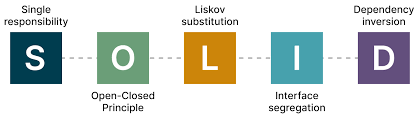
Alright, let’s get real for a sec. Ever worked on a codebase that’s grown so wild, it’s basically an overgrown jungle? Yeah, me too. You poke one thing, something else breaks, and suddenly you’re wishing you’d stuck to flipping burgers. That’s where SOLID comes in—the five commandments of not losing your mind as your project balloons.
Picture SOLID like house rules for your code. Keeps things less “hoarder episode” and more “Marie Kondo.” Let’s break it down, but with less boring theory and more real-life flavor.
1. S – Single Responsibility Principle (SRP)
“A class should have only one reason to change.” Sounds fancy, but here’s the deal: imagine your restaurant’s chef is also running inventory and handing out food. Recipe for disaster. Chef calls in sick? No dinner. Inventory’s a mess? Oops, no tomatoes. Mad customers? Chef’s too busy yelling at Yelp reviews to cook.
So, you fix it—chef cooks, manager handles stock, waiter serves. Everyone’s got one job. The kitchen doesn’t implode. Same for code: make your classes do ONE thing. Not two. Not “oh, just this other little thing.” One.
2. O – Open/Closed Principle (OCP)
“Open for extension, closed for modification.” Translation: stop breaking stuff that works. Think about your phone’s operating system—Android doesn’t get ripped apart every time you want a new app, right? You just add apps. If you had to rewrite Android to get Candy Crush? Nightmare fuel.
Point is, set your code up so you can bolt on new features without gutting what’s already there. Future you will thank you.
3. L – Liskov Substitution Principle (LSP)
“If it walks like a duck…” Well, in code, if it’s supposed to be a car, it better not suddenly sprout wings and fly off. You rent a car, you expect wheels and a steering wheel, not a cockpit. Subclasses should act like their parents—no surprises, no “plot twists.”
Just keep your promises. If you say it’s a car, don’t hand someone a jet.
4. I – Interface Segregation Principle (ISP)
“Don’t force people to use what they don’t need.” Imagine a gym where your only option is the “all-in” package—weights, cardio, pool, goat yoga, whatever. Most folks just want one or two things. Let ‘em pick, don’t shove everything into one mega-package.
Same with code: don’t make a giant interface with a million methods. Break it up. Smaller, focused pieces—so classes only deal with what matters to them.
5. D – Dependency Inversion Principle (DIP)
“Don’t tie yourself to the little guy.” You run a coffee shop. You don’t wanna be stuck with just one bean supplier, right? You set a quality standard, and whoever meets it, you’re good. Keeps you flexible, not at the mercy of Bob’s Discount Beans if he flakes.
In code, depend on contracts (interfaces/abstractions), not just specific classes. Swap stuff out easy, no drama.
So—why should you even care? Because SOLID means cleaner, less rage-inducing code. Stuff’s easier to update, fewer bugs, and you’ll spend less time cursing past you. Plus, your teammates won’t hate you. Win-win.
Bottom line: SOLID isn’t some academic nonsense. It’s just common sense for keeping your code from turning into a dumpster fire. If your project feels like a kitchen after a toddler’s “cooking” session, SOLID is your mop and bucket. Get to cleaning.